

Install from Salesforce AppExchange
1
Navigate to the AppExchange listing
The Salesforce environment admin installs the application. Navigate to the Go Autonomous listing on Salesforce AppExchange and find Go Autonomous.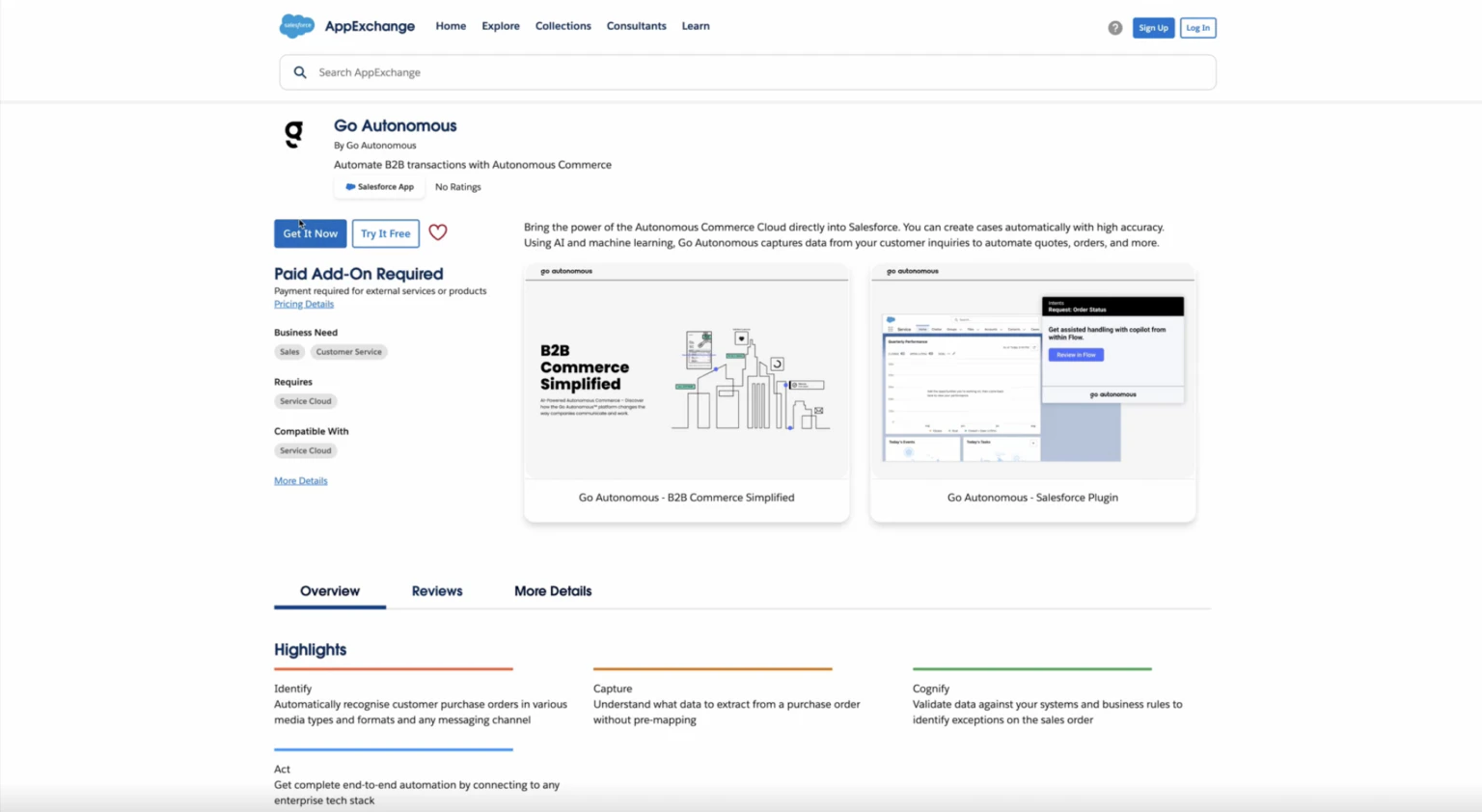
2
Select the environment
After pressing Get it Now, Salesforce will redirect you to a new tab where you select which environment to install into. If you are unsure, reach out to your Go Autonomous Customer Success Manager.
3
Set permissions for specific profiles
After confirming the environment and agreeing to the terms and conditions, you will be navigated to the Install Go Autonomous page. Select Install for Specific Profiles.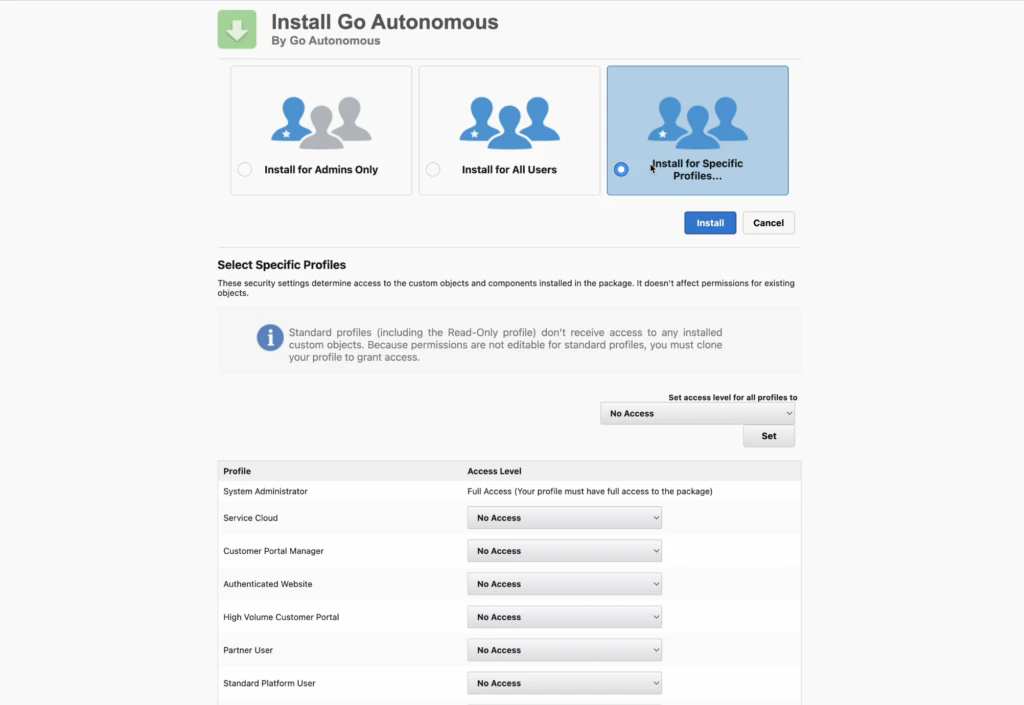
4
Assign the Go Autonomous API Only profile
Scroll through the profile list and set the following profiles to Go Autonomous API Only: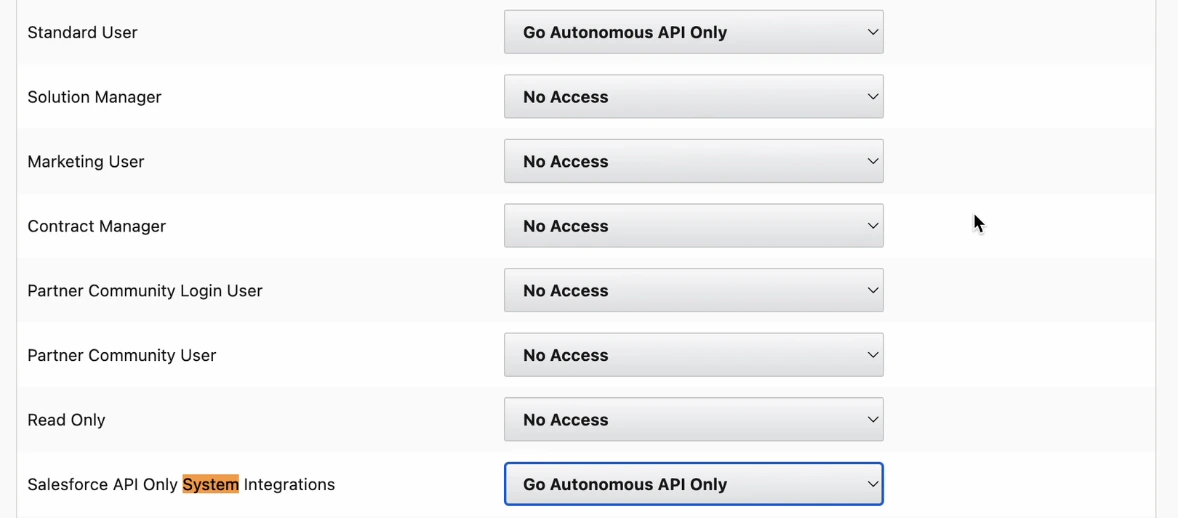
- Standard User
- Sales API Only System Integrations
5
Install the application
Scroll back to the top and press Install under the Install for Specific Profiles button.
6
Confirm installation
Wait for the package to finish installing. Once complete, a success notification appears. Press Done to return to Salesforce.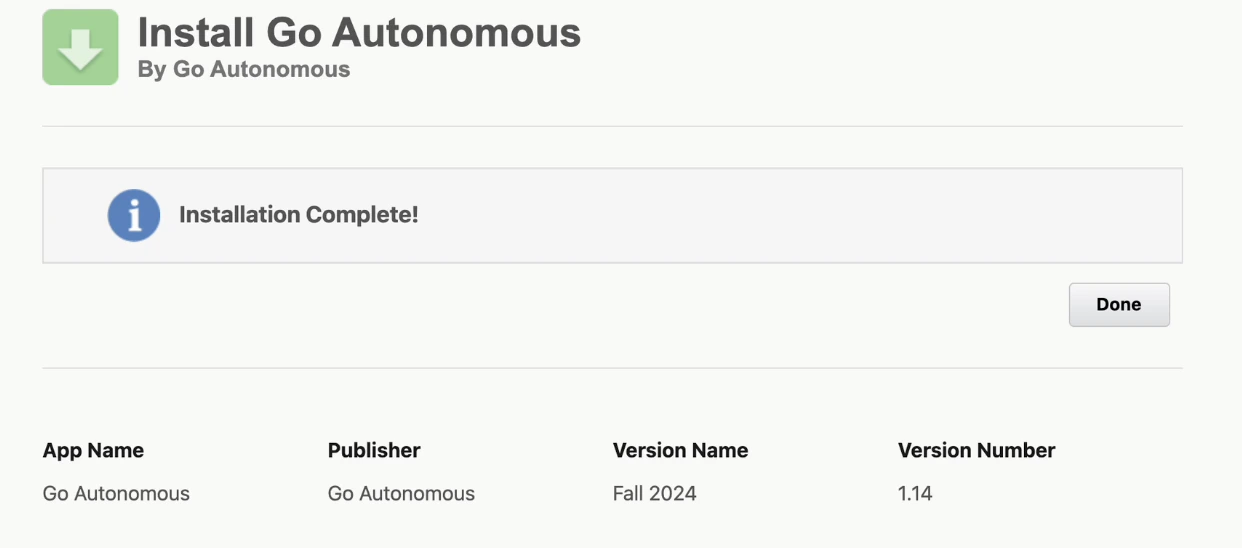
Create a profile and configure the user
1
Navigate to the Standard User Profile
In Salesforce Setup, use the left navigation pane to find Administration > Users > Profiles. Find Standard User in the profile list.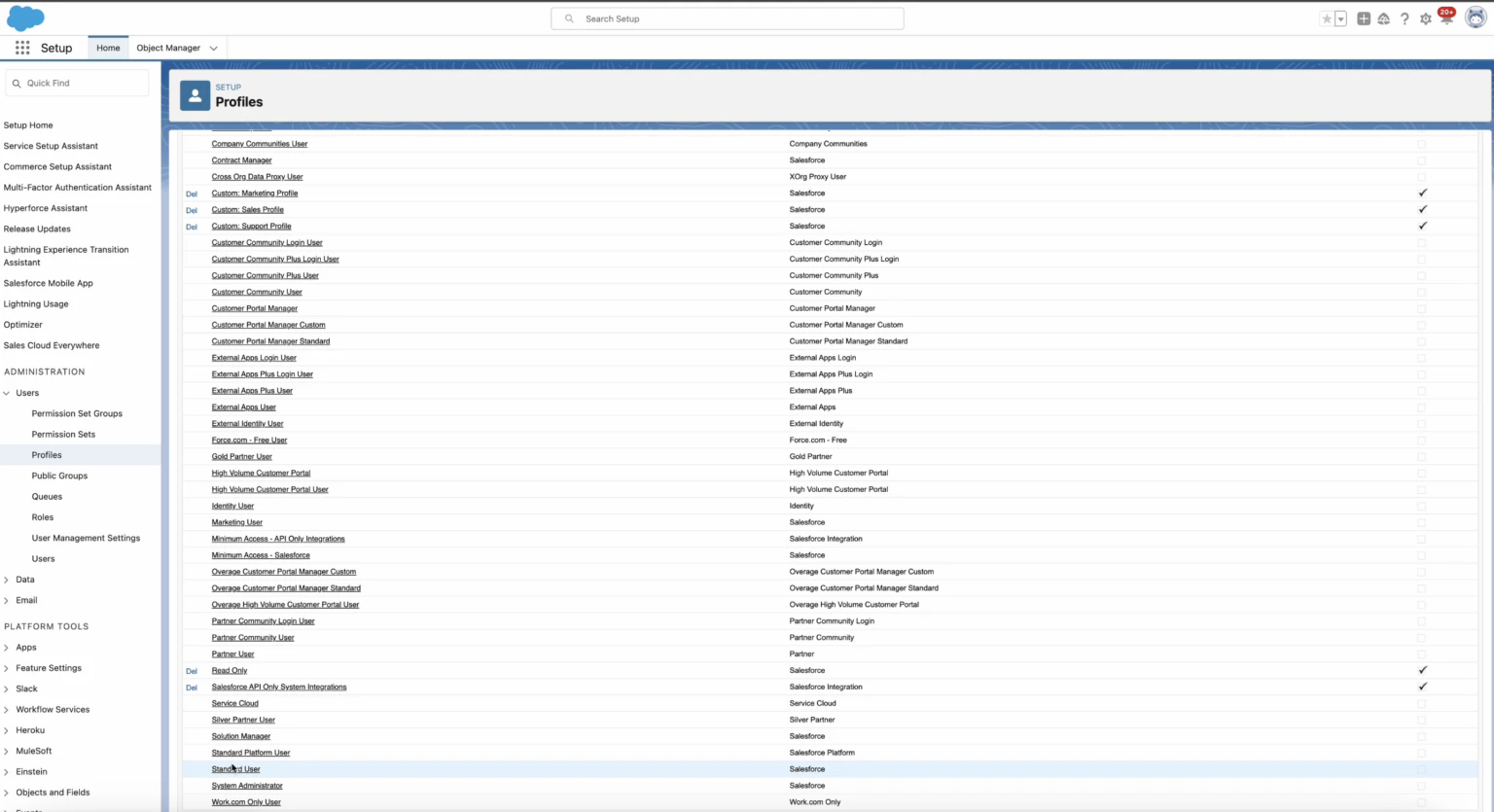
2
Clone the Standard User Profile
Inside the Standard User Profile, press Clone.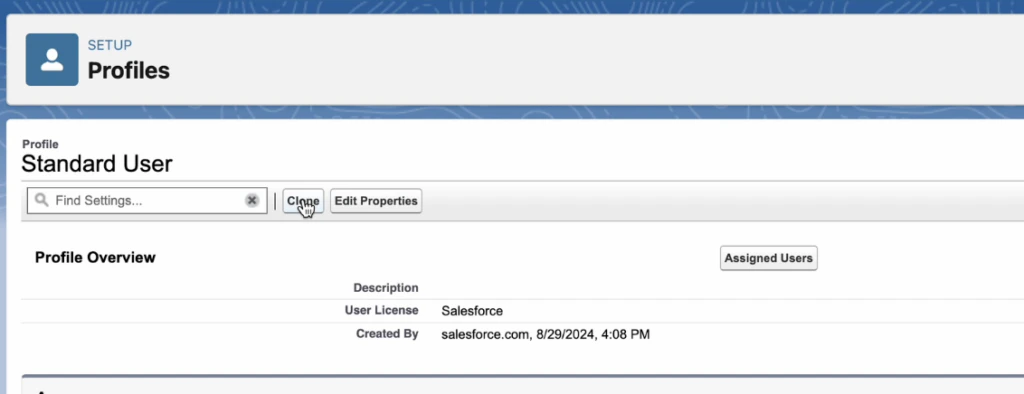
3
Name the new profile
Enter Go Autonomous API as the profile name, then press Save.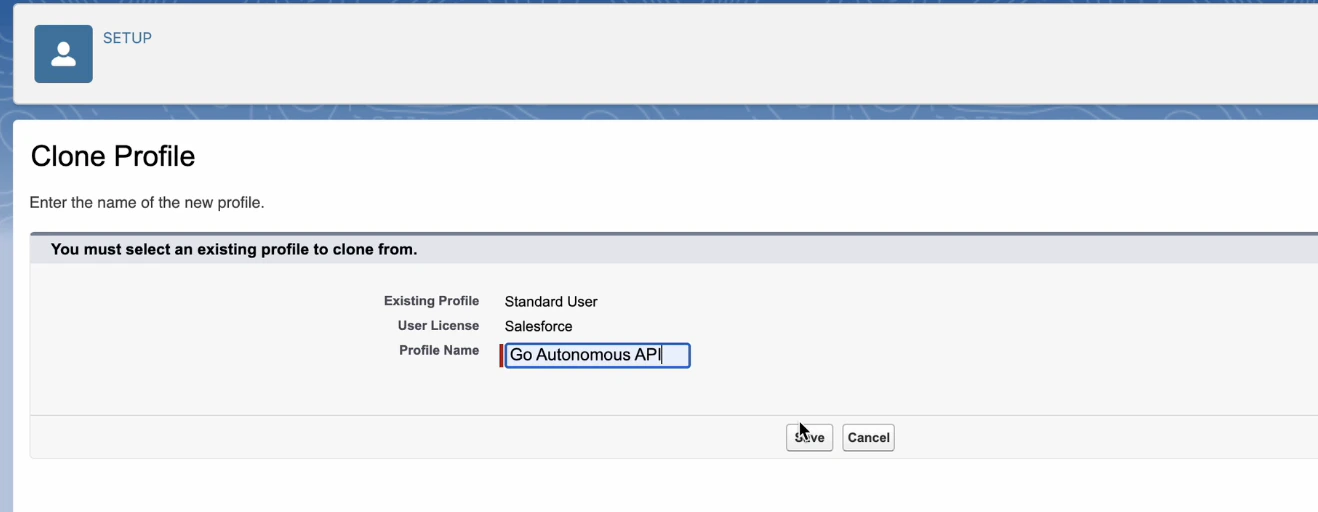
4
Configure profile permissions
Click Edit on the new profile and set the following permissions:Administrative permissions:
- Access Libraries
- Apex REST Services
- API Enabled
- API Only User
- Edit Read Only Fields
- Select Files from Salesforce
- Assign Topics
- Create Topics
- Edit Tasks
- Edit Topics
Save the profile once all permissions are configured.
5
Enable Go Autonomous in Connected App Access
After clicking Edit on the Profiles page, enable Go Autonomous and Go Autonomous Flow in the Connected App Access section.
6
Create a new user
From the Profiles page, navigate to Users > Users in the left pane and press New User.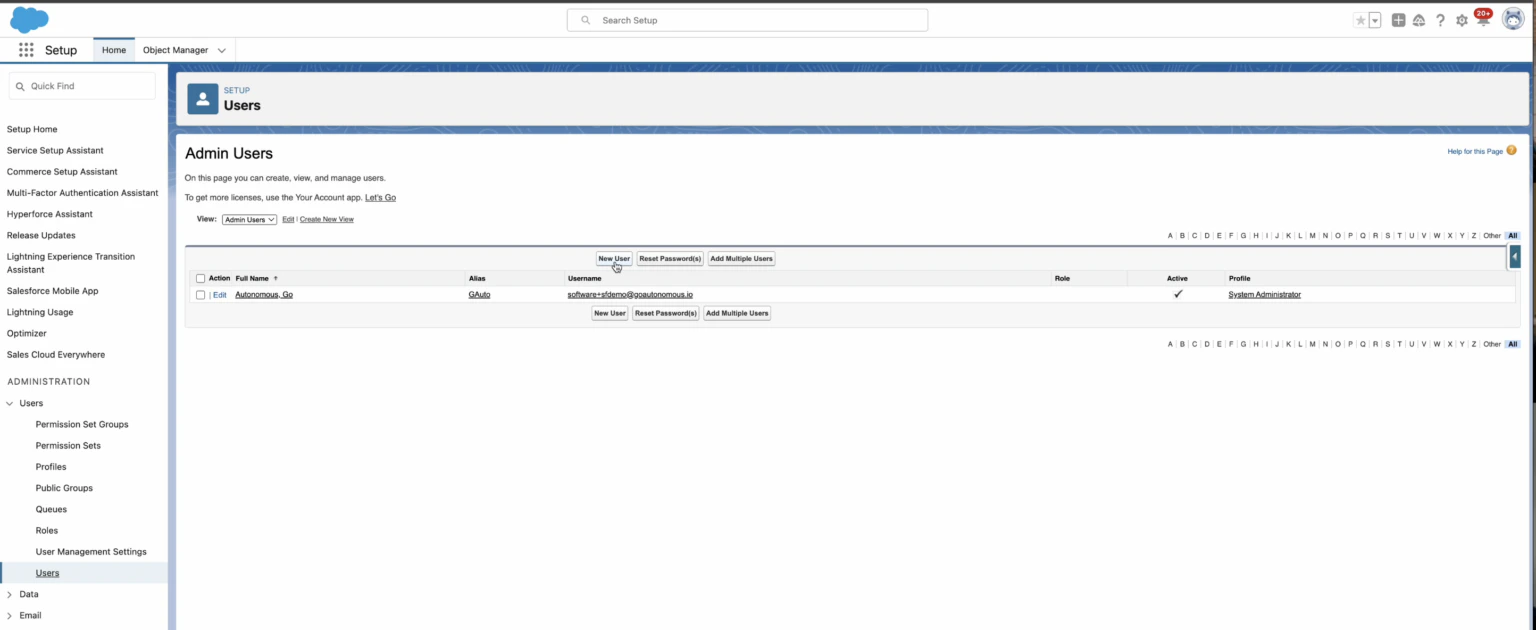
7
Configure the new user
Set User License to Salesforce and Profile to Go Autonomous API. Fill in the required fields: Last Name, Alias, Email, Username, and Nickname. Set the Locale and Language fields to match your primary location, then save.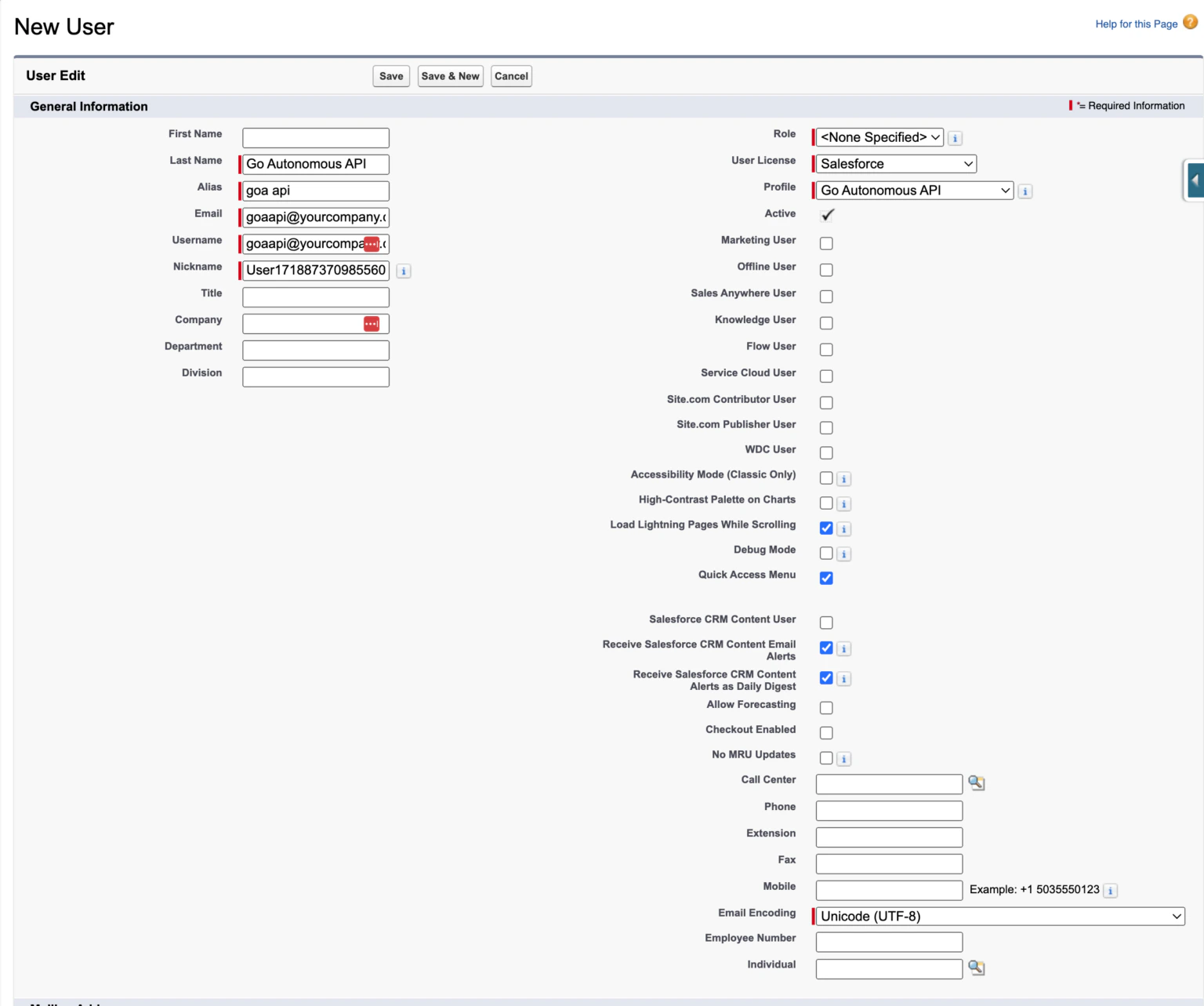
8
Configure the Connected App
Navigate to Platform Tools > Apps > App Manager. Find the Go Autonomous application, click the down arrow at the far right of the row, and press Manage.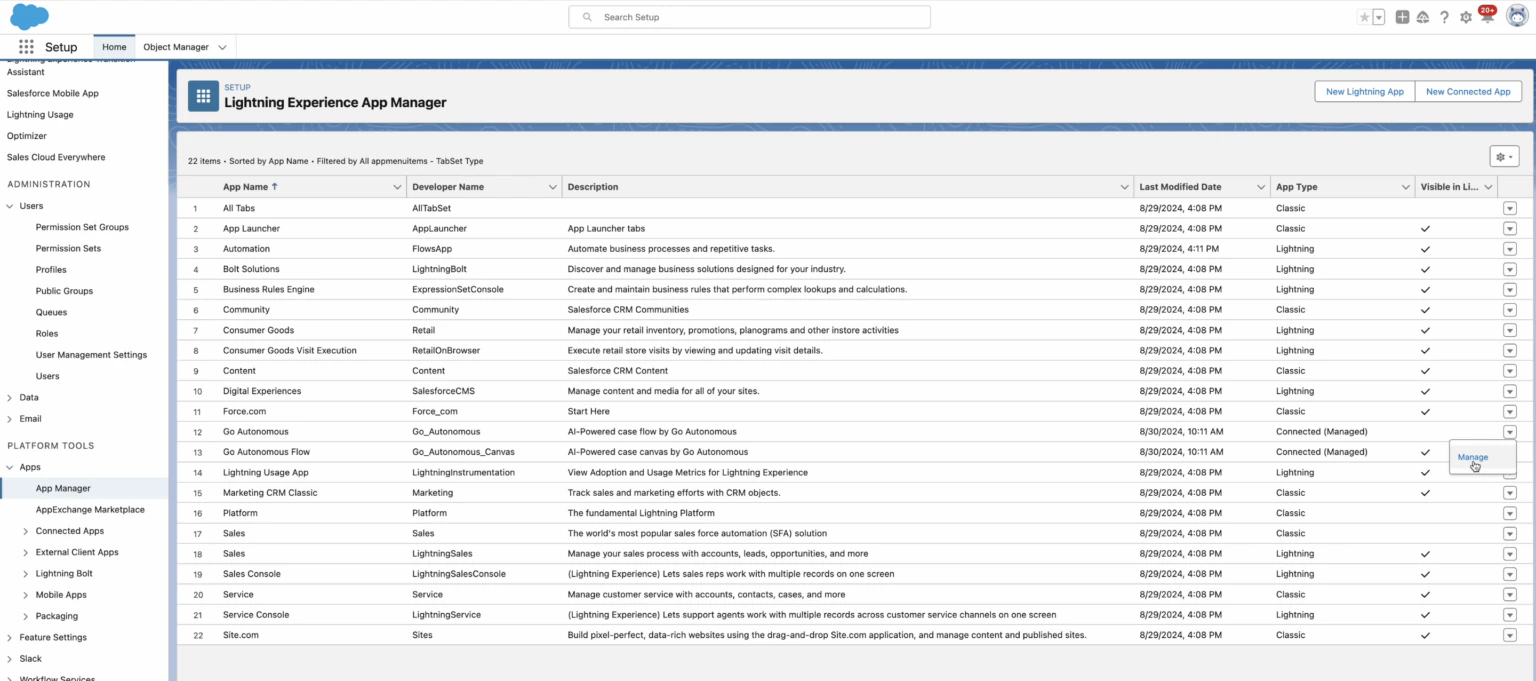
9
Set the Client Credentials Flow
Press Edit Policies. Under the Client Credentials Flow section, click the magnify glass beside the Run As field, select Go Autonomous API from the pop-up, then press Save.
Set up the Salesforce page layout
1
Open page layout settings
Log in to Salesforce and navigate to the page layout settings for Cases.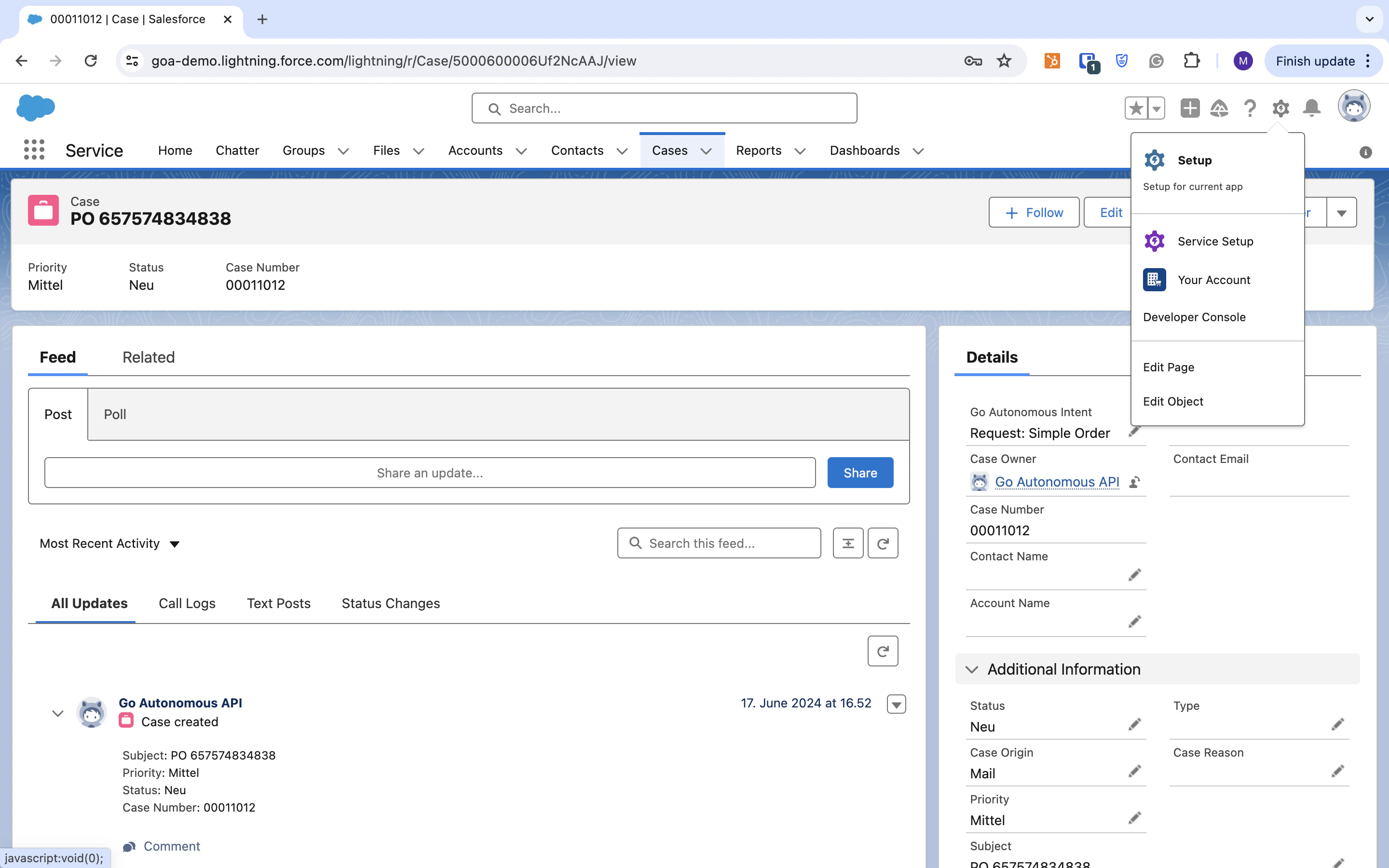
2
Edit the layout
Click Edit to open the layout editor.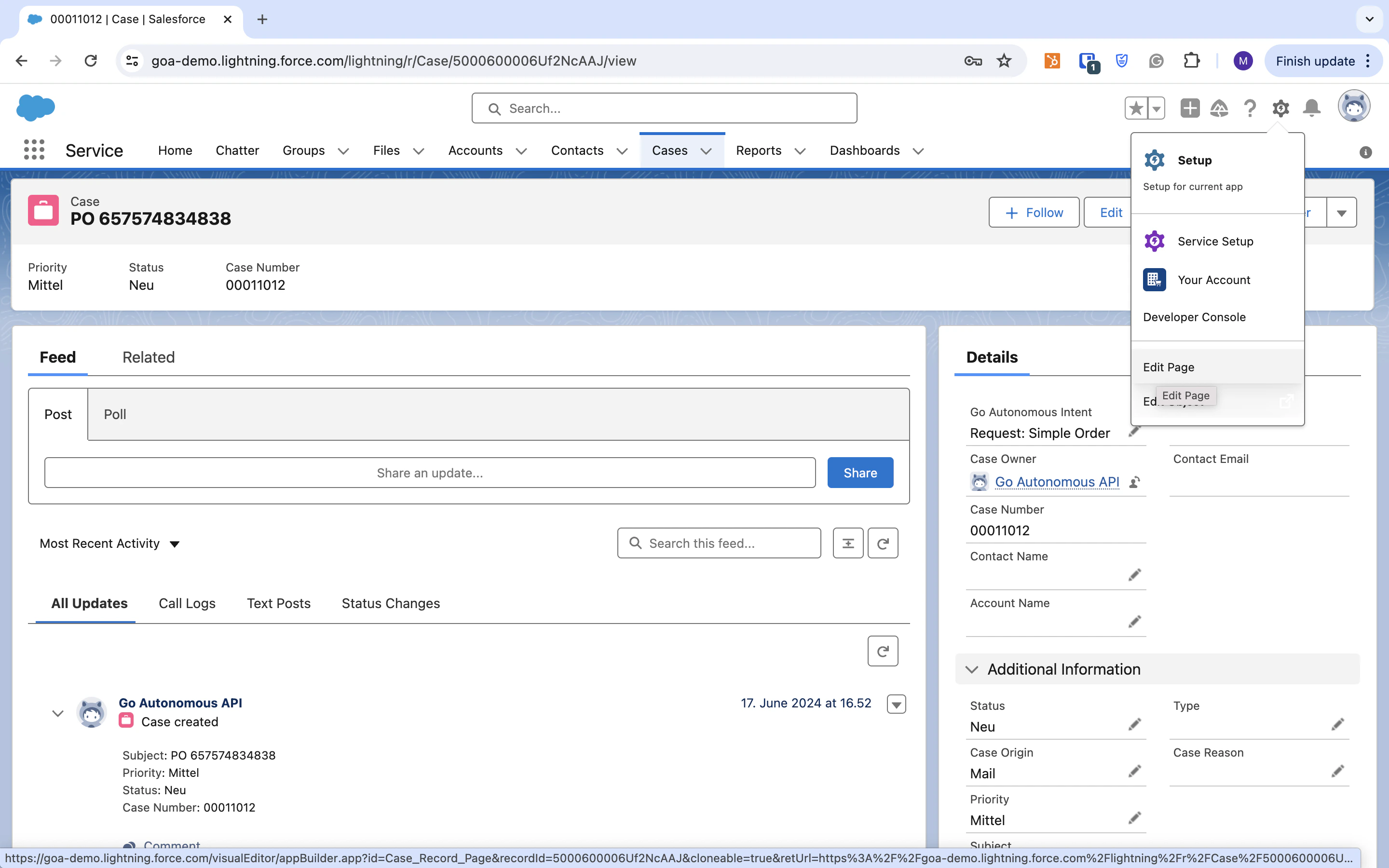
3
Search for Go Autonomous components
In the left sidebar, search for Go Autonomous.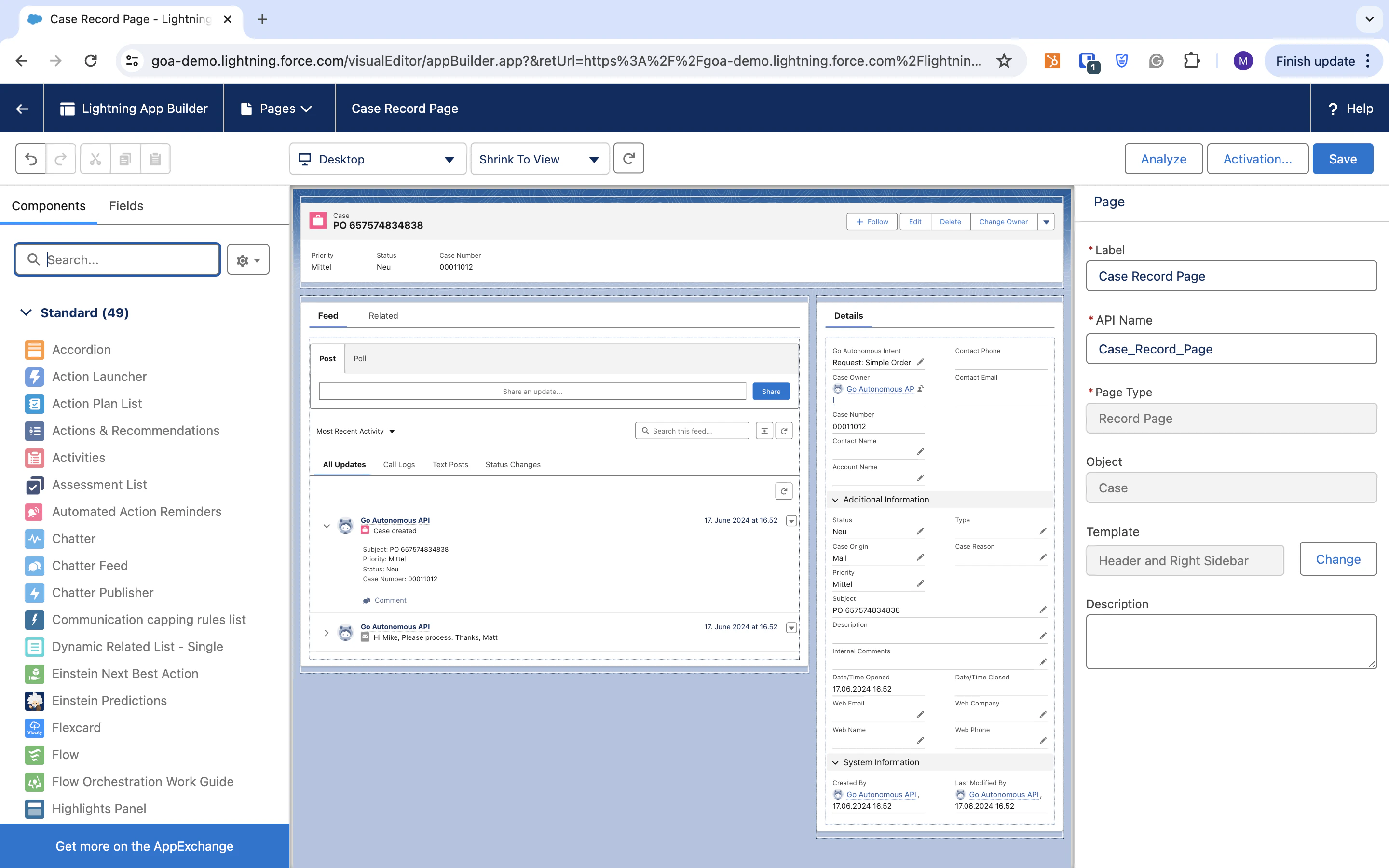
4
Locate the components
You’ll see Go Autonomous – Flow and Go Autonomous – Case Management listed under Custom – Managed.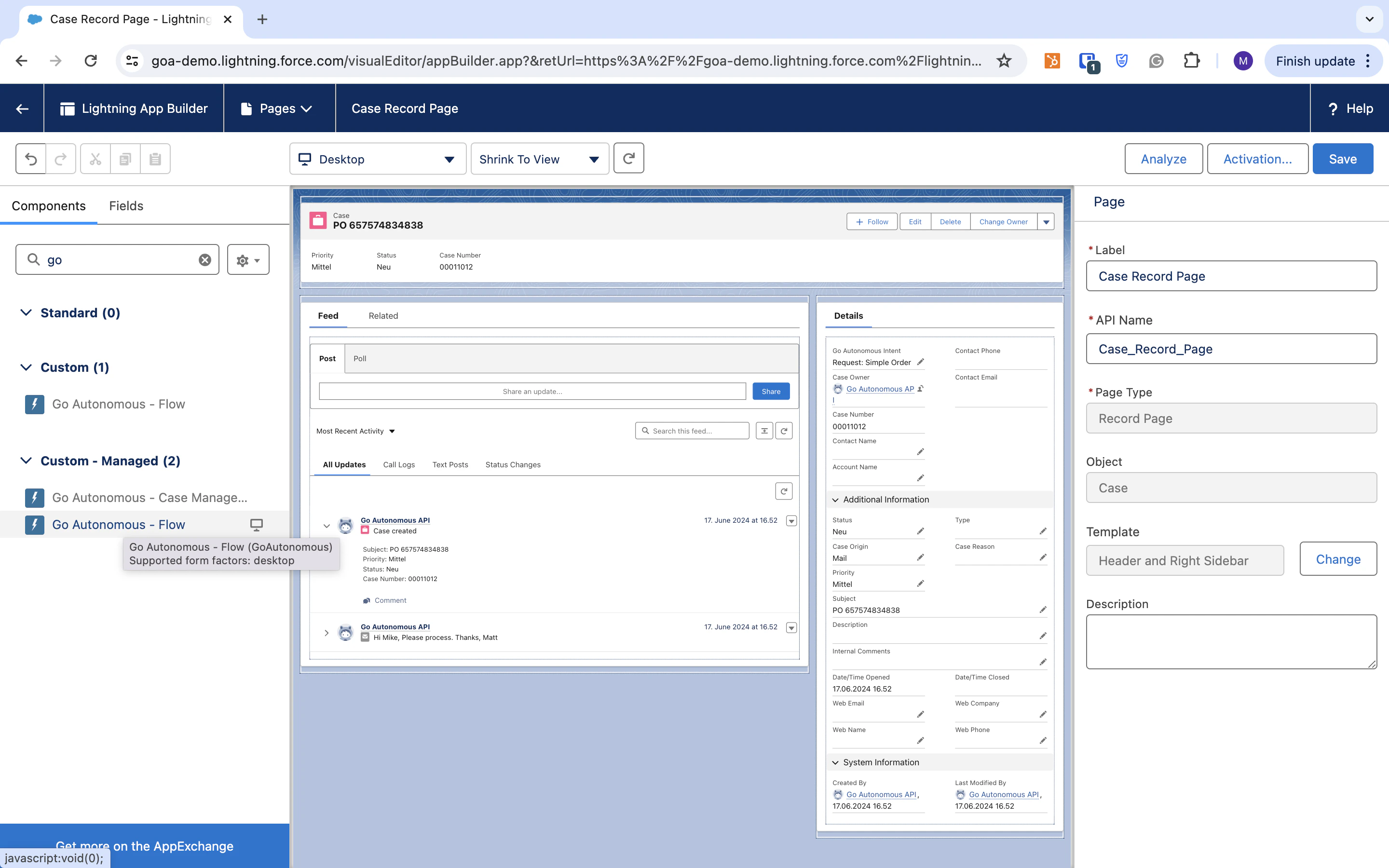
5
Add Go Autonomous – Flow
Drag Go Autonomous – Flow to the left side of the case layout.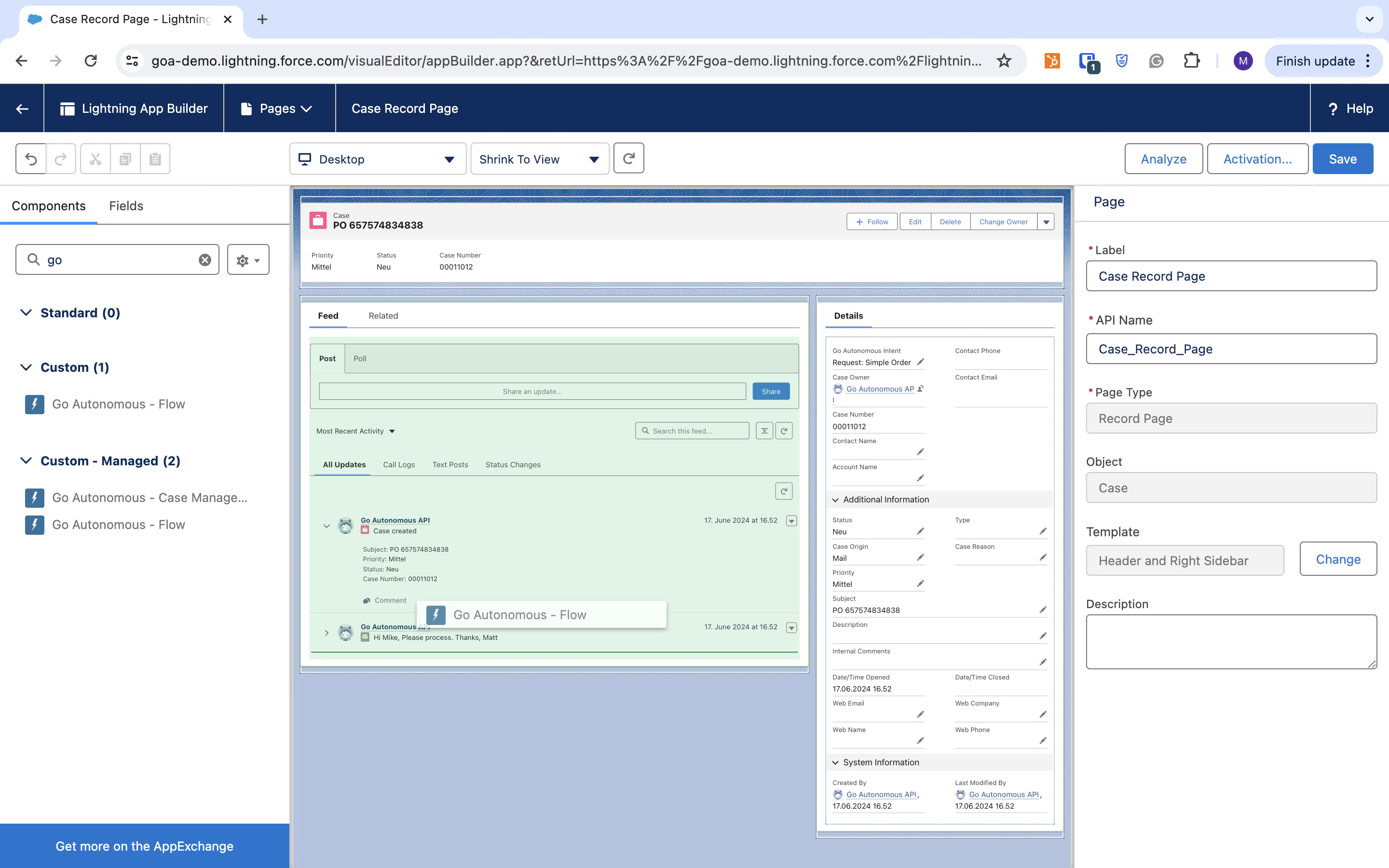
6
Add Go Autonomous – Case Management
Drag Go Autonomous – Case Management to the right side of the layout.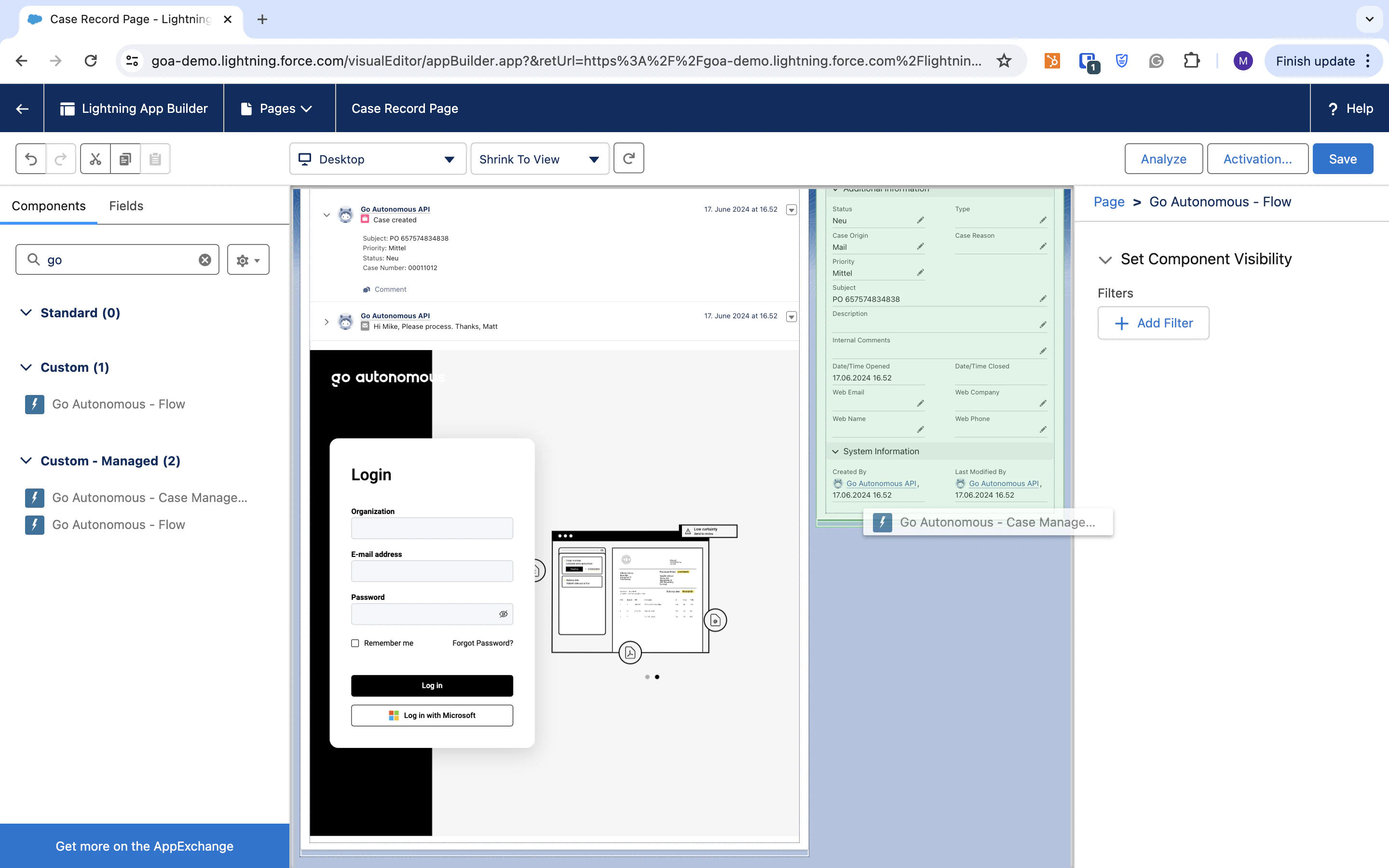
7
Save the layout
Click Save. Close the window when you see the Changes saved confirmation.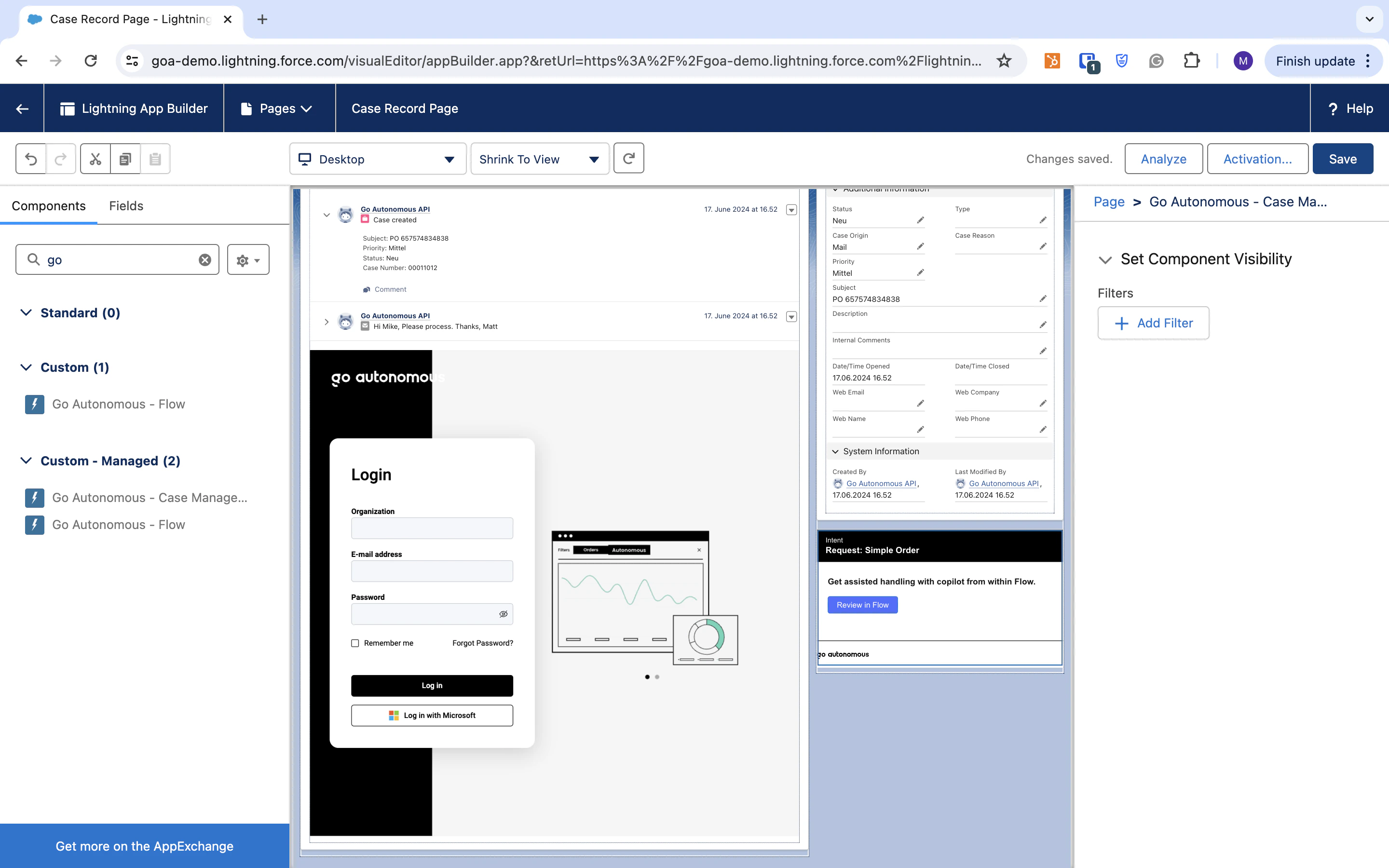
Configure the connector in Go Autonomous
1
Open Connectors
Log in to the Go Autonomous platform and navigate to Administration > Company Settings > Connectors.
2
Create a Salesforce connection
Find the Salesforce connector in the Available Connectors section. Give your connection a clear name (e.g., “Main Salesforce Org”), select either Case Creation or Case Enrichment depending on your desired functionality, and enter the custom domain URL for your Salesforce organisation.
3
Confirm the connection
Once saved, your Salesforce connection will appear under Active Connections. You’re now ready to use the integration.